
Costa Rica’s new president, Laura Fernández, announces that she will inaugurate a new mega-prison in the country, featuring one of the world’s most advanced surveillance systems to curb crime, just as President Bukele did in El Salvador. The Costa Rica new president aims to address security concerns through this initiative. This move has generated significant discussion among the citizens, as it raises questions about the balance between security and civil liberties. Fernández insists that the prison will not only serve as a deterrent but also focus on rehabilitation, offering educational programs and mental health support for inmates. The Costa Rica new president believes this initiative is crucial for the nation’s future.
National Stadium in San José,
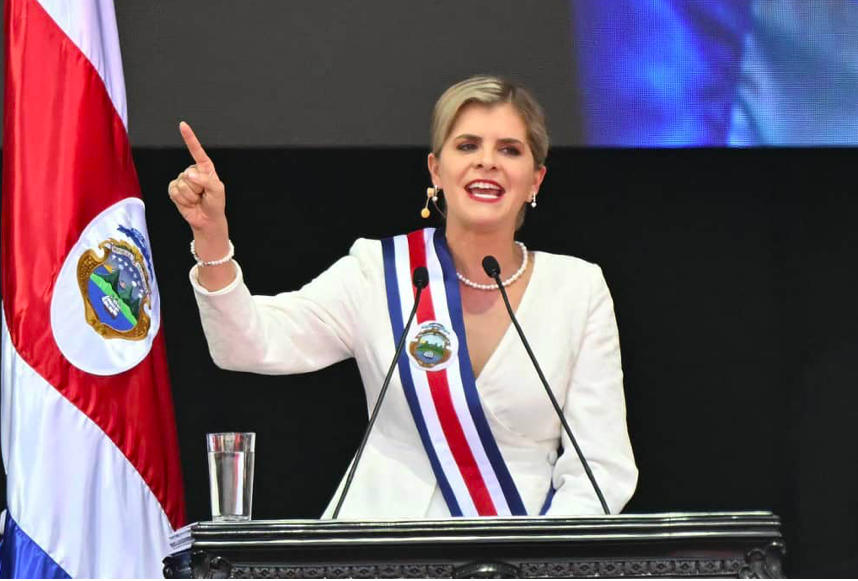
The 39-year-old political scientist took office during a large ceremony at the National Stadium in San José, becoming the second woman to lead Costa Rica. Her four-year term begins after a comfortable February 1 election victory powered by the popularity of outgoing President Rodrigo Chaves, her political mentor and the central figure in what the new government calls a continuity project. Fernández’s administration plans to build on Chaves’ policies while introducing innovative approaches to tackle pressing issues, emphasizing social equity and environmental sustainability as cornerstones of her governance.
As the Costa Rica new president, Laura Fernández brings fresh perspectives to governance, hoping to inspire her administration with innovative solutions.
Fernández first speech as president
Fernández used her first speech as president to put security at the center of her administration. Costa Rica, long seen as one of the safest and most stable countries in the Americas, has faced rising violence tied to drug trafficking networks using the country as a transit and logistics point. To combat this, her government plans to implement community policing initiatives, where local law enforcement works closely with citizens to build trust and collaborate on safety strategies. Additionally, investment in technology and training for police forces will be prioritized to enhance their response capabilities and effectiveness.
The plans set forth by the Costa Rica new president are designed to create a safer environment and restore public trust in law enforcement.
The Costa Rica new president is committed to restoring safety and stability in the nation. “The reform we need is deep, and we are going to push it forward,” Fernández said. The new president said her review of state institutions would not amount to an attack on the separation of powers. “We are going to review our institutions. That will never mean attacking the separation of powers. I would never do that,” she said. Furthermore, Fernández emphasized the importance of fostering transparent governance, promising to engage with citizens and encourage public participation in policy-making processes. This approach aims to rebuild trust in government and ensure that the needs and voices of all Costa Ricans are heard and addressed. The Costa Rica new president recognizes that citizen involvement is vital for effective governance.
As her presidency unfolds, Laura Fernández faces numerous challenges, from economic recovery post-pandemic to social inequalities that have been exacerbated by recent events. Her administration is poised to tackle these issues head-on, ensuring that progress is made not just in terms of policy changes but also in the daily lives of Costa Ricans. By prioritizing education, healthcare, and job creation, she aims to build a brighter future for the nation.
The Costa Rica new president is determined to implement policies that not only address immediate challenges but also set the foundation for future growth.

In addition to her domestic policies, Fernández intends to strengthen Costa Rica’s international relations, particularly within Central America. By fostering cooperation on security, trade, and environmental issues with neighboring countries, she hopes to create a more stable and prosperous region. Foreign investment and tourism are also critical components of her strategy, as she seeks to showcase Costa Rica as a safe and attractive destination for travelers and businesses alike.
Through her initiatives, the Costa Rica new president aims to elevate the country’s profile on the international stage.
Moreover, Laura Fernández’s presidency signals a shift in the political landscape, particularly in her approach to environmental policies. With climate change posing a significant threat to Costa Rica’s rich biodiversity and natural resources, her administration is committed to sustainable development practices. Initiatives such as reforestation programs, investment in renewable energy sources, and efforts to reduce plastic waste are on the agenda. This holistic approach aims not only to protect the environment but also to create jobs and stimulate economic growth through green technology and sustainable tourism.
The Costa Rica new president’s commitment to environmental sustainability is expected to influence policies across the region.
Back to Power of Natur